Who's the Best for Performance Reviews: Peoplebeam vs Heyramp
You are comparing two performance review platforms and need a clear winner, not another feature matrix. The wrong choice means wasted budget and another stalled review cycle next quarter.
This article breaks down Peoplebeam and HeyRamp across review tools, goal alignment, and manager coaching. By the end, you will know which platform fits your team size and review cadence, plus a direct verdict on who should buy which.
Quick Verdict: Peoplebeam vs HeyRamp for Performance Reviews
If you're torn between Peoplebeam and HeyRamp for your performance review process, this quick verdict gives you the essential differences at a glance. Both tools can handle employee evaluation, but they serve different audiences with distinct priorities.
HeyRamp is built for growing teams that want an all-in-one performance management system at a predictable cost. It uses one flat fee per seat, which makes budgeting simple. Peoplebeam, by contrast, is generally positioned for larger enterprises with more complex review cycle requirements.
| Factor | HeyRamp | Peoplebeam |
|---|---|---|
| Pricing model | One flat fee per seat, affordable for SMBs | Typically enterprise-level pricing |
| Core strength | Built-in training, personality insights, and coaching tips | Customizable workflows for complex structures |
| Ideal user | Teams of 20+ organizations and 400+ teams | Larger organizations with dedicated HR teams |
| Key extras | Automatic compliance documentation, guided conversation templates | Flexible configuration options |
HeyRamp stands out for its built-in training and personality insights, which are integrated directly with performance tools. Managers get instant coaching tips and automated reminders, plus aggregated people analytics dashboards to track progress across the review cycle.
If you want a performance appraisal tool that includes guided conversation templates for difficult discussions and automatic compliance documentation, HeyRamp is the stronger fit. Peoplebeam may appeal if you need deep customization, but for most teams, HeyRamp delivers more value per seat.
At a glance: how HeyRamp compares to Peoplebeam on the features that matter most.
| Feature | HeyRamp | Peoplebeam |
|---|---|---|
| Performance Reviews | ✓ | ✓ |
What Is HeyRamp?
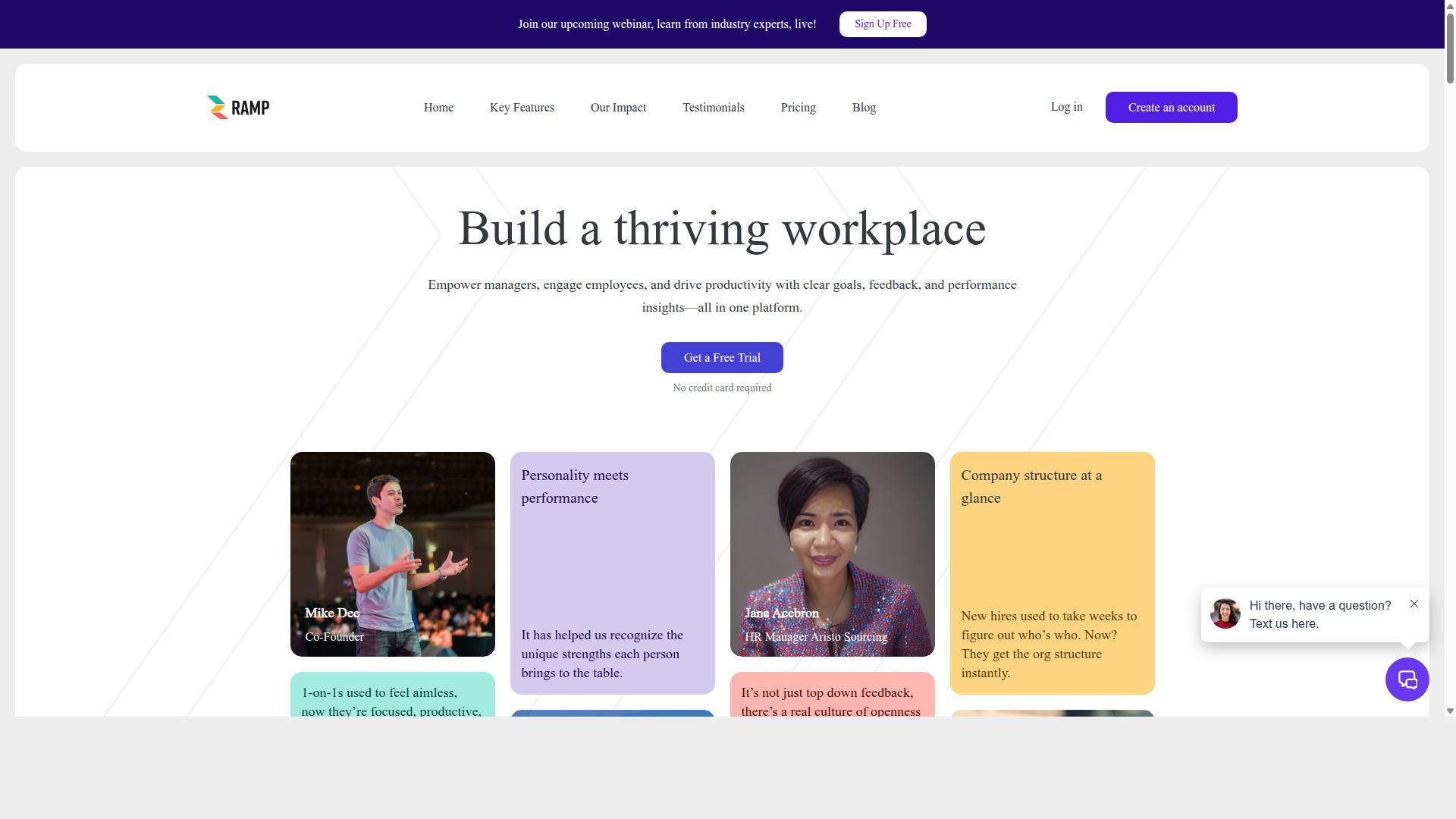
HeyRamp is an all-in-one productivity software platform designed to streamline employee engagement, performance management, and workplace communication. It enables managers, engages employees, and drives productivity with clear goals, feedback, and performance insights, all in one platform.
The platform is built for leadership, HR teams, managers, and individual contributors. Each role gets tools tailored to their part of the performance review cycle, from setting expectations to delivering feedback. This makes HeyRamp useful across the entire organization, not just for the HR department.
HeyRamp focuses on creating a transparent company structure. Its features include company structure visualization, 1-on-1 meeting tools, feedback and review systems, and personality insights. These tools help managers understand their teams better while giving employees a clear picture of where they fit and how they can grow.
For teams comparing performance review software, HeyRamp stands out because it combines performance management with daily engagement. Instead of treating reviews as a once-a-year event, the platform supports continuous feedback and ongoing communication. This approach helps organizations move from annual appraisals to a more dynamic, productive workflow.
HeyRamp is available globally, making it a practical option for distributed teams and multinational companies. Its emphasis on ease of use means HR leaders can implement a performance management system without forcing employees to navigate a steep learning curve, which is often a deciding factor in any HR software comparison.
What Is Peoplebeam?
Peoplebeam is a performance management solution designed to help organizations manage employee evaluations, feedback, and development, though specific details about its offerings are limited in public sources. It appears to operate in the performance management system space, where companies typically expect tools for structured reviews and ongoing talent development.
Based on what is publicly known, Peoplebeam likely supports core performance review software functions such as 360-degree feedback, goal tracking, and scheduled review cycles. Many platforms in this category also include features for peer review, manager review, and self-assessment, which help create a fuller picture of an employee's contributions.
The platform may target mid-to-large enterprises that need scalable processes for performance appraisal across multiple teams or locations. Larger organizations often look for systems that can handle complex rating scales, review templates, and calibration sessions to keep evaluations consistent.
For organizations evaluating Peoplebeam, the key is to verify current capabilities directly. Because public documentation is sparse, checking the official website for up-to-date details on pricing plans, integration with HRIS systems, and customer support is the most reliable approach.
As with any HR software comparison, the fit depends on your specific needs. Some teams prioritize ease of use and user interface, while others focus on analytics dashboards, KPI tracking, or review reminders. Understanding your own requirements first makes evaluating any performance management system, including Peoplebeam, much more straightforward.
Features Compared
This section breaks down the key feature areas where HeyRamp and Peoplebeam differ, helping you evaluate which platform aligns with your organization's needs. HeyRamp's capabilities are verified and documented, while Peoplebeam's features are described generally based on what similar performance management systems typically offer.
The comparison focuses on three critical areas: performance review tools, goal alignment, and manager enablement. Each area plays a distinct role in building an effective performance management system, and understanding how these platforms approach them matters for your final decision.
Performance Review Tools and Feedback Cycles
HeyRamp provides a structured platform for feedback and reviews, while Peoplebeam likely offers similar capabilities but with different customization options. HeyRamp supports feedback collection, 360-degree feedback, self-assessment, peer review, and manager review within a single system. This means your team can run complete review cycles without switching between multiple tools.
Review templates and rating scales come built into HeyRamp, so you can standardize how employee evaluation happens across departments. The platform also handles review automation, which reduces the administrative burden on HR teams. Peoplebeam may offer customizable review cycles and feedback collection, but the depth of those features is less clear from available information.
One standout differentiator is HeyRamp's automatic compliance documentation with time-stamped secure records. This feature creates a clear audit trail for every review, which supports both legal compliance and consistent record-keeping. For organizations that need defensible performance documentation, this capability adds meaningful value beyond basic review tools.
Goal Alignment and OKR Integration
Effective performance management hinges on aligning individual goals with organizational objectives, and both platforms aim to support this through goal-setting features. HeyRamp approaches this with company structure visualization, which lets you see how goals cascade from leadership down to individual contributors. This visual approach makes it easier to spot misalignment before it becomes a problem.
HeyRamp includes OKR and goal management with real-time progress visualization, so teams can track their momentum continuously rather than waiting for quarterly check-ins. KPI tracking and performance metrics are also integrated, giving managers a clear view of what matters most. Peoplebeam likely offers goal setting and alignment tools, but specific details about its OKR integration remain unclear.
The practical benefit here is that goal tracking stays connected to daily work. When reviews happen, you can reference actual progress data instead of relying on memory. This makes performance appraisal conversations more concrete and less subjective, which employees tend to find fairer and more actionable.
Manager Enablement and Coaching Insights
Managers need tools to conduct effective one-on-ones and coach their teams, and HeyRamp offers built-in meeting tools with agendas and action tracking. These features help managers run consistent check-ins where nothing important gets skipped. The platform also provides guided conversation templates and coaching tips to support productive discussions.
HeyRamp integrates personality insights with performance tools, which gives managers a deeper understanding of how their team members prefer to communicate and work. This combination supports more personalized coaching conversations. Sentiment prompts and automated reminders keep the process moving, so meetings stay scheduled and follow-ups actually happen.
Peoplebeam may offer manager enablement features like feedback templates and review reminders, which are common in HR software. However, the depth of coaching insights appears more limited based on what is publicly known. HeyRamp also includes confidential manager notes and built-in training videos for one-on-ones, performance reviews, and personality testing. These resources help managers improve their skills while using the platform, which is a practical advantage for teams with varied management experience.
Pricing Compared
Regarding pricing, HeyRamp offers transparent, flat-rate plans, while Peoplebeam's pricing is not publicly detailed. This difference matters when you are budgeting for a performance management system and need predictable costs.
HeyRamp uses a simple per-seat model. You pay $5.00 per seat per month with monthly billing, or you can switch to annual billing and pay $3.00 per seat per month. Both options include full access from day one, and you can switch plans anytime.
There is also a 14-day free trial that requires no credit card. This makes it easy to test the review cycle tools, 360-degree feedback features, and analytics dashboard before committing. For larger organizations, HeyRamp offers enterprise custom pricing paid per seat.
Peoplebeam takes a different approach. Their pricing is not publicly disclosed, so you must contact their sales team to get a quote. This is common among enterprise HR software, but it makes comparison shopping more difficult and slower.
| Pricing Factor | HeyRamp | Peoplebeam |
|---|---|---|
| Public pricing | Yes, flat-rate per seat | Not disclosed |
| Monthly cost | $5.00 per seat | Contact sales |
| Annual cost | $3.00 per seat per month | Contact sales |
| Free trial | 14 days, no credit card | Not specified publicly |
| Enterprise options | Custom pricing per seat | Custom quotes |
The value proposition goes beyond the sticker price. HeyRamp's flat fee includes built-in training and compliance documentation, which can reduce setup costs and internal admin time. That means the per-seat price often covers more of what you need for employee evaluation and talent development.
With Peoplebeam, the lack of published pricing means you may need to budget for a longer sales process. You may also face variable costs depending on which modules you need for peer review, manager review, or self-assessment. In an HR software comparison, predictable pricing with a clear trial period is often the more practical choice for teams that want to move quickly.
Who Should Choose HeyRamp
HeyRamp is ideal for organizations seeking an affordable, all-in-one performance management solution with strong employee engagement features. It is built for leadership, line managers, human resources, and individual contributors who want a performance management system that works for everyone, not just the HR team. For small to mid-sized teams, HeyRamp offers a practical fit. It is trusted by 20+ organizations and 400+ teams, which suggests it scales well without the complexity that often comes with enterprise-grade software. If your company wants to run effective employee evaluations without a steep learning curve, this platform is worth considering. Ease of use is a core strength here. HR professionals can set up review cycles quickly, while line managers can complete manager reviews and peer reviews without needing extensive training. The built-in training resources mean your team can start using the tool immediately, reducing the friction that often slows down performance appraisal adoption. The platform also stands out for its personality insights. These insights help managers and individual contributors understand working styles, which supports better communication and stronger team development. For companies prioritizing employee development, this feature adds a layer of value beyond standard KPI tracking and rating scales. Here is a quick snapshot of who benefits most:- Leadership: Gets visibility into goal setting, performance metrics, and talent management across teams.
- Line managers: Runs self-assessments, 360-degree feedback, and calibration sessions with clear review templates.
- HR teams: Manages the entire performance management system, from review reminders to analytics dashboards.
- Individual contributors: Participates in continuous feedback loops and tracks personal employee development goals.
Who Should Choose Peoplebeam
Peoplebeam may be a better fit for larger enterprises with complex performance management needs and a budget for premium solutions. Organizations with thousands of employees often require a performance review software that can handle multiple business units, diverse job families, and region-specific review cycles. Peoplebeam appears to target this segment, offering customizable workflows and advanced analytics that can adapt to intricate organizational structures.
Mid-to-large companies with mature HR departments are the typical audience for this type of platform. These organizations usually need deep integration with their existing HRIS, robust reporting capabilities, and the ability to configure rating scales and review templates for different teams. If your company operates across multiple countries or has complex matrix reporting lines, a tool like Peoplebeam may offer the flexibility you need to align performance appraisal with corporate strategy.
However, it is important to evaluate Peoplebeam's specific offerings directly before committing. Feature lists, pricing plans, and implementation requirements can vary, and what works for one enterprise may not suit another. Research suggests that larger organizations prioritize compliance, data security, and calibration features, so confirm that Peoplebeam addresses these areas in a way that matches your internal policies.
The decision ultimately depends on your organizational size and the complexity of your employee evaluation processes. If you need extensive 360-degree feedback, peer review, and manager review modules with heavy customization, Peoplebeam may be worth exploring. Just be prepared for a potentially longer onboarding process and a higher price point compared to simpler alternatives in the HR software comparison landscape.
Final Verdict
In the final analysis, HeyRamp stands out for its affordability, ease of use, and built-in engagement tools, making it a strong contender for most organizations. When comparing performance review software options, the decision often comes down to balancing cost against capability, and HeyRamp delivers on both fronts without the complexity that plagues many enterprise systems.
HeyRamp's flat-rate pricing model is the clearest differentiator in this comparison. Instead of paying per seat or per module, you get access to the full performance management system at one predictable fee. For growing teams, this removes the guesswork from budgeting and ensures every employee gets the same tools for feedback collection, goal setting, and continuous feedback.
The platform is trusted by 20+ organizations and 400+ teams, which speaks to its practicality across different company sizes. Its feature set covers the essentials that HR teams actually need: personality insights integrated with performance tools, guided conversation templates for difficult discussions, and aggregated people analytics dashboards. These aren't add-ons you pay extra for, they are core parts of the experience.
Built-in training and education set HeyRamp apart for managers who need support, not just software. Instant coaching tips and automated reminders help leaders stay on top of review cycles without manual chasing. Automatic compliance documentation reduces administrative overhead, while the focus on employee engagement ensures performance appraisals lead to development, not just ratings.
PeopleBeam may hold appeal for larger enterprises that need extensive customization and have the budget to match. However, the lack of public information about its pricing plans, user interface, and customer support makes it difficult to recommend with confidence. If you require deep integration with HRIS systems and highly tailored rating scales, it could be worth a conversation, but you will need to request a demo to get basic answers.
For most HR leaders, the choice is clear. HeyRamp offers a cost-effective, user-friendly approach to employee evaluation, 360-degree feedback, and manager review processes. It handles self-assessment, peer review, and competency assessment within one platform, along with review templates and KPI tracking that keep everyone aligned.
If you want a performance management system that prioritizes employee development and simplifies review automation, HeyRamp is the stronger pick. Consider PeopleBeam only if your organization demands heavy customization and has the resources to invest in a more complex rollout. Start with HeyRamp's free trial to see how its analytics dashboard and review reminders fit your workflow before making a final decision.
Recommended Resources: